
Paddle Board Size Guide: Finding the Perfect Fit
Navigating the world of paddle boards requires understanding dimensions, volume, and how they align with your weight, skill, and desired activity.
Understanding Paddle Board Types
Paddle boards aren’t one-size-fits-all; they cater to diverse needs and preferences. All-around boards are the most versatile, suitable for flatwater cruising, yoga, and light surf – generally wider and thicker for stability. Touring boards prioritize efficiency and speed over long distances, featuring a narrower profile and often a pointed nose.
For speed enthusiasts, racing boards are long, narrow, and designed for optimal performance. Yoga boards emphasize stability, typically being wider and longer to provide ample space. Recognizing these core types is the first step in selecting a board that complements your intended use, influencing the ideal size and shape for a fulfilling experience on the water.
Inflatable vs. Hard Paddle Boards
The choice between inflatable and hard paddle boards impacts size considerations. Inflatable boards (iSUPs) are portable and easy to store, often slightly wider for added stability due to their softer construction. They’re excellent for beginners and those with limited storage. Hard boards, constructed from epoxy or fiberglass, offer superior performance and rigidity, favored by experienced paddlers and racers.
Generally, hard boards can be narrower and longer for increased speed and efficiency. While iSUPs have closed the gap in performance, understanding these differences is crucial when determining the appropriate dimensions for your skill level and paddling style. Both types come in various sizes to suit different riders.
Paddle Board Dimensions: Length, Width, and Thickness

Paddle board size is defined by three key dimensions: length, width, and thickness. Length influences speed and tracking – longer boards paddle faster in a straight line. Width dictates stability; wider boards are more stable, ideal for beginners or activities like yoga. Thickness affects buoyancy and weight capacity; thicker boards support heavier riders and more gear.
These dimensions work together. A longer, narrower board is fast but less stable, while a shorter, wider board is stable but slower. Understanding how each dimension impacts performance is vital for selecting the right board for your needs and skill level.
Length and its Impact on Performance
Paddle board length significantly impacts glide, speed, and tracking. Longer boards (12’6”+) generally offer better speed and efficiency for covering distance, making them ideal for touring or racing. They cut through the water with less resistance. Shorter boards (under 10’) are more maneuverable, perfect for surfing or recreational paddling in smaller waves.
However, increased length can reduce maneuverability. A longer board requires more effort to turn. Consider your primary paddling style. If you prioritize straight-line speed, opt for a longer board. If you value agility and responsiveness, a shorter length is preferable.
Width and Stability Considerations
Paddle board width is a crucial factor determining stability. Wider boards (30”+) provide a more stable platform, making them excellent choices for beginners, yoga enthusiasts, or anyone prioritizing balance. This extra width distributes weight more evenly, reducing the likelihood of tipping.
Conversely, narrower boards (under 28”) are faster and more efficient, but require greater balance and skill. They offer less drag in the water, enhancing speed. Consider your experience level and intended use. If stability is paramount, choose a wider board. Experienced paddlers seeking performance can opt for a narrower design.
Thickness and Weight Capacity
Paddle board thickness directly impacts both rigidity and weight capacity. Thicker boards (5”+) are stiffer, offering improved performance and the ability to support heavier riders and gear. This rigidity translates to better energy transfer with each paddle stroke, enhancing efficiency.
Thinner boards (under 4”) are lighter and easier to maneuver, but may flex more, especially under heavier loads. They are suitable for lighter paddlers or those prioritizing portability. Consider your weight, the weight of any gear you’ll carry, and the type of paddling you plan to do when selecting board thickness.
Rider Weight and Board Volume
Board volume, measured in liters, is crucial for flotation and stability. It needs to correspond to your weight to ensure optimal performance. A board with insufficient volume will sit too low in the water, making paddling difficult and increasing the risk of tipping. Conversely, excessive volume can make the board feel sluggish and less responsive.
Generally, more volume is needed for heavier riders, those carrying gear, or paddling in choppy conditions. Beginners also benefit from higher volume for increased stability. Accurately assessing your weight and intended use is key to selecting the appropriate board volume for a safe and enjoyable experience.
Calculating the Ideal Board Volume
A simple starting point for calculating ideal board volume is to multiply your weight in kilograms by 0.67. This provides a baseline liter measurement. However, this is just an estimate; adjustments are needed based on skill level and intended use. Beginners should add 10-20% to this figure for enhanced stability.
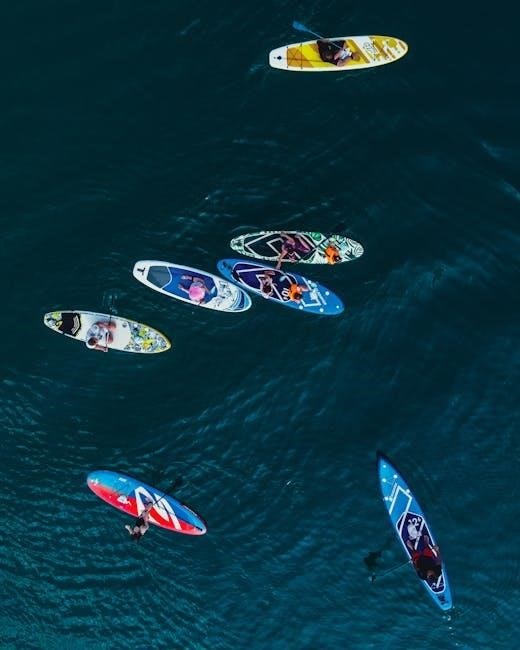
Experienced paddlers or those focused on performance (like racing) might opt for a board closer to their weight ratio. Consider adding volume if you frequently paddle with a child or carry substantial gear. Online calculators and brand-specific size guides can further refine this calculation, offering more personalized recommendations.
Weight Capacity Charts by Activity
Understanding activity-specific weight capacities is crucial. All-around boards typically support riders up to 220-250 lbs, suitable for general paddling and light gear. Touring boards, designed for longer distances, often accommodate up to 280 lbs, prioritizing efficiency. Yoga boards prioritize stability and generally handle up to 200 lbs.
For racing, weight capacity might be lower (180-220 lbs) to maximize speed and performance. When carrying children or pets, add their weight to your own and choose a board with a significantly higher capacity. Always err on the side of caution; exceeding the weight limit compromises stability and safety.
Paddle Boarding Activities and Size Recommendations
Your chosen activity heavily influences the ideal paddle board size. For all-around paddling, a 10’6” to 11’ long and 30” to 32” wide board offers versatility. Touring benefits from longer boards (12’6”+) for efficient gliding and speed. Yoga enthusiasts prefer wider, more stable boards (32”+) around 10’ to 11’.
Racing demands narrow, longer boards (12’6”+), prioritizing speed. Surfing requires shorter, more maneuverable boards (8’ to 10’). Consider your skill level; beginners benefit from wider, longer boards for increased stability, while experienced paddlers can handle narrower, shorter options.
All-Around Paddle Boards: Versatility and Size
All-around boards are the workhorses of the paddle board world, designed for diverse conditions and rider abilities. Typically ranging from 10’6” to 11’6” in length and 30” to 32” in width, they strike a balance between stability and maneuverability. These boards excel in flatwater cruising, gentle waves, and recreational paddling.
Volume is key; aim for a board with sufficient thickness (4.75”+) to support your weight and gear. Wider boards offer greater stability, ideal for beginners or those prioritizing balance. Length impacts tracking – longer boards track straighter, while shorter boards turn more easily.
Touring Paddle Boards: Distance and Efficiency
Touring boards, also known as expedition boards, are built for covering significant distances with speed and efficiency. Characterized by their longer, narrower profiles – typically 12’6” to 14’ long and 28” to 30” wide – they glide through the water with minimal effort. Increased length enhances tracking, reducing the need for constant correction.
Volume remains crucial, but touring boards often have a slightly lower volume compared to all-around boards of similar length. Look for boards with a pointed nose to cut through chop and a displacement hull for improved speed. These are ideal for fitness paddling, exploring coastlines, and multi-day adventures.
Racing Paddle Boards: Speed and Performance
Racing paddle boards prioritize speed and efficiency above all else, designed for competitive paddling and achieving maximum velocity. These boards are typically the longest and narrowest available, ranging from 12’6” to 14’ or even longer, with widths around 26” to 28”. Their streamlined shape minimizes drag, allowing paddlers to maintain high speeds with each stroke.
Construction is key; racing boards are often built with lightweight materials like carbon fiber to reduce weight and enhance performance. They feature a flat or slightly concave hull for optimal tracking and stability at high speeds. These boards are less forgiving and require a higher skill level to control effectively.
Yoga Paddle Boards: Stability and Comfort
Yoga paddle boards are specifically engineered for practicing yoga and fitness routines on the water, emphasizing exceptional stability and a comfortable surface. These boards are generally wider and thicker than all-around boards, typically ranging from 30” to 34” in width and 4” to 6” in thickness. This increased volume provides a stable platform for various poses and movements.
Deck pads are crucial, covering a significant portion of the board to offer superior grip and cushioning. Lengths usually fall between 10’ and 11’, providing ample space without sacrificing maneuverability. They prioritize balance and a non-slip surface for a safe and enjoyable yoga experience.
Paddle Board Fin Systems and Their Influence
Paddle board fin systems significantly impact performance characteristics like tracking, speed, and maneuverability; The choice between single fin and multi-fin setups depends on your paddling style and intended use. Single fins offer a classic surfing feel, providing smooth, predictable turns and good tracking in flatwater conditions.
Multi-fin setups, such as 2+1 or quad fins, enhance stability and control, particularly in choppy water or when paddling faster. Fin size and placement are also critical; larger fins provide more hold, while smaller fins offer greater maneuverability. Experimenting with different fin configurations allows you to fine-tune your board’s performance.
Single Fin vs. Multi-Fin Setups
Choosing between a single fin and a multi-fin setup hinges on your paddling priorities. Single fins excel in creating a natural, surf-like experience, offering a smooth rail-to-rail transition ideal for cruising and downwind paddling. They provide excellent directional stability in calmer waters, making them a popular choice for long-distance touring.
Multi-fin systems – including thrusters (three fins) and quads (four fins) – boost maneuverability and control, especially in challenging conditions. These setups deliver superior bite and hold, enhancing performance in choppy water or when actively turning. Multi-fins are favored by performance-oriented paddlers and surfers seeking responsiveness.
Fin Size and Placement for Different Conditions
Fin size and placement dramatically impact paddle board handling. Larger fins generate more drag but offer increased stability and tracking, beneficial for beginners or choppy waters. Smaller fins reduce drag, enhancing speed and maneuverability, suited for flatwater touring or surfing.
Fin placement also matters; forward placement boosts tracking, while rearward placement enhances maneuverability. Wider fin spacing provides stability, while narrower spacing improves turning radius. Experimenting with fin positioning allows you to fine-tune your board’s performance to match specific conditions and your paddling style. Consider adjustable fin boxes for versatility.
Children’s Paddle Board Sizes
Selecting a paddle board for a child prioritizes stability and manageability. Shorter, wider boards (7’0” to 9’0”) are ideal, offering a forgiving platform. Volume is crucial; ensure the board can support the child’s weight without being overly cumbersome. Inflatable boards are often preferred for their softness and portability, enhancing safety.
Consider the child’s age and skill level. Beginners benefit from maximum stability, while more experienced paddlers might handle slightly narrower boards. Always pair the board with a properly sized paddle and a personal flotation device (PFD). Supervise children closely and choose calm water conditions.
Safety Considerations for Kids
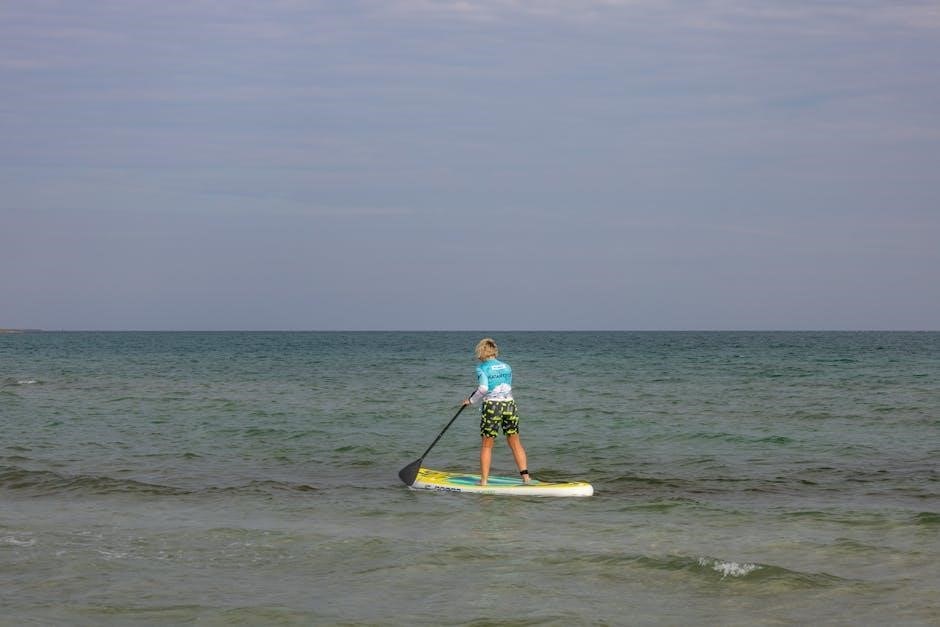
Prioritizing safety is paramount when children are paddle boarding. A properly fitted personal flotation device (PFD) is non-negotiable, and should be worn at all times. Constant adult supervision is essential, even for experienced young paddlers. Choose calm, shallow water away from boat traffic and strong currents.
Teach children basic water safety skills, including how to fall safely and re-mount the board. Sun protection – hats, sunscreen, and appropriate clothing – is vital. Consider a leash appropriate for their size and skill level, and emphasize the importance of awareness of their surroundings.
Advanced Rider Considerations: Skill Level & Conditions
Experienced paddlers can refine their board choice based on skill and intended conditions. Surfing requires narrower, shorter boards for maneuverability, while long-distance touring benefits from longer, narrower designs for efficiency. Consider your weight and the typical water conditions you’ll encounter.
Stronger paddlers might prefer a smaller volume board for increased responsiveness, but always prioritize stability in challenging conditions. Evaluate fin setups – single fins offer tracking, while multiple fins enhance maneuverability. Understanding how wind, waves, and currents impact board handling is crucial for safe and enjoyable paddling.
Choosing a Board for Waves
For wave riding, prioritize boards designed with features enhancing maneuverability and control. Shorter lengths (under 9 feet) and narrower widths (under 30 inches) are common, allowing for quicker turns and responsiveness. A pulled-in tail shape aids in carving, while a rounded nose prevents pearling.
Consider volume based on your weight; more volume provides stability during paddling out, but too much can hinder performance. Fin setups are crucial – side bites or a 2+1 fin configuration offer hold and drive. Experienced surfers may opt for quad fin setups for increased speed and responsiveness in larger waves.

Impact of Water Conditions (Flatwater, Choppy, Surf)
Water conditions dramatically influence ideal paddle board size. Flatwater benefits from longer, wider boards offering stability and glide – excellent for touring or yoga. Choppy water demands increased volume and width for better tracking and handling bumps, prioritizing comfort and control.
Surf necessitates shorter, narrower boards with maneuverability. A board’s shape and fin setup become critical in waves. Consider a board with a rounded nose to prevent digging and a tail shape suited for carving. Adapting your board choice to the specific conditions maximizes enjoyment and performance.
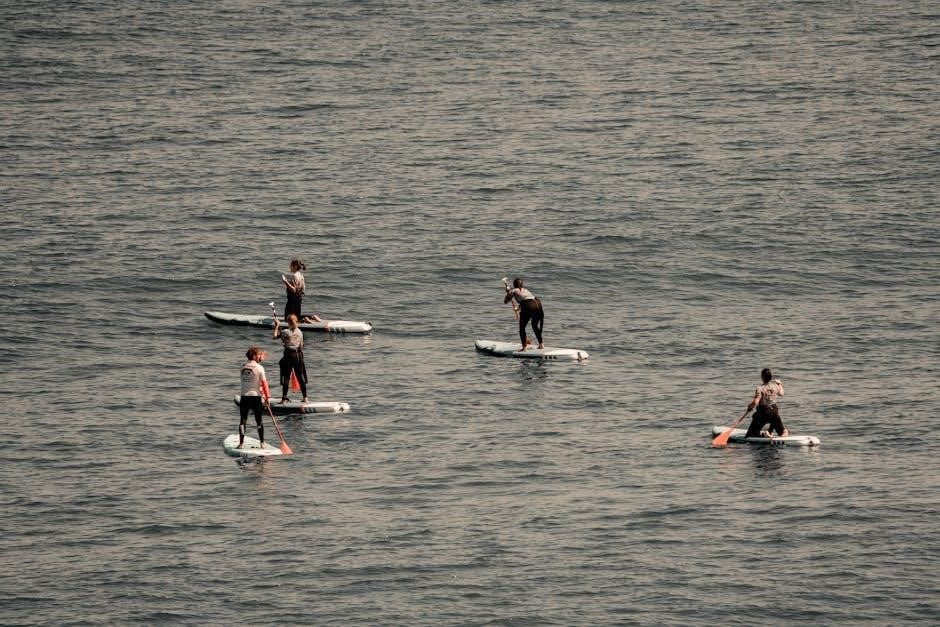
Measuring Yourself for a Paddle Board
Accurate measurements are crucial for selecting the right paddle board. Begin by determining your height and weight – these are foundational for volume calculations. Next, consider your “stand-over height,” the distance from your feet to your wrists when standing upright.
This height helps determine appropriate board length; a longer board provides more stability, while a shorter one enhances maneuverability. Knowing these dimensions, alongside your intended activity, allows for a more precise board selection, ensuring optimal performance and a comfortable paddling experience.
Stand-Over Height and Board Length

Your stand-over height directly influences the ideal paddle board length. A general guideline suggests adding 6-12 inches to your height to determine a suitable board length for all-around use. Taller paddlers typically benefit from longer boards, enhancing stability and glide, especially in choppy conditions.
Shorter boards, conversely, offer increased maneuverability, favored by surfers or those prioritizing quick turns. Consider your skill level; beginners often prefer longer boards for added stability, while experienced paddlers may opt for shorter lengths for performance. Accurate measurement ensures a comfortable and efficient paddling experience.

Paddle Board Materials and Their Effect on Size

Paddle board construction significantly impacts weight and, consequently, perceived size and performance. Inflatable boards (PVC or drop-stitch) generally offer greater width and thickness for stability, compensating for their softer feel. They are often larger in volume for a given length compared to hard boards.
Epoxy and fiberglass boards, being rigid, can achieve sleeker profiles – narrower and thinner – without sacrificing structural integrity. This allows for higher speeds and more responsive handling. Material choice influences the optimal dimensions; a heavier paddler might prefer the buoyancy of an inflatable, while a performance-focused rider may choose a lighter, narrower epoxy board.
PVC vs. Drop-Stitch Construction
Inflatable paddle boards aren’t created equal. PVC (Polyvinyl Chloride) is a basic construction, often found in cheaper boards, offering limited stiffness. Drop-stitch construction, however, utilizes thousands of threads connecting the top and bottom layers, creating a remarkably rigid platform when inflated.
Drop-stitch boards allow for higher pressure inflation, resulting in a shape closer to a hard board. This technology enables larger boards with greater volume and stability, crucial for beginners or those prioritizing all-around use. PVC boards tend to be less durable and perform better on calmer waters, while drop-stitch excels in varied conditions.
Epoxy and Fiberglass Boards
Hard paddle boards commonly utilize epoxy resin and fiberglass cloth, creating a durable and high-performance shell. Fiberglass offers a good balance of strength and weight, making it a popular choice for all-around boards and touring shapes. Epoxy resin, when combined with fiberglass, enhances durability and reduces water absorption, extending the board’s lifespan.
Higher-end boards often incorporate carbon fiber into the construction, further reducing weight and increasing stiffness. These boards are favored by racers and experienced paddlers seeking optimal speed and responsiveness. Epoxy/fiberglass boards generally require more care during transport and storage compared to inflatables, but offer a superior paddling experience.
Common Paddle Board Size Mistakes to Avoid
A frequent error is selecting a board that’s too small, leading to instability and difficulty paddling, especially for beginners or heavier riders. This results in frequent falls and a frustrating experience. Conversely, choosing a board that’s too large can make it cumbersome to maneuver and slow, diminishing performance and enjoyment.
Ignoring your weight and the intended activity is another common mistake. A touring board needs different dimensions than a yoga board. Failing to consider water conditions – flatwater versus waves – also impacts the ideal size. Prioritize a board that matches your skill level and planned usage to maximize your paddling success.
Choosing a Board That’s Too Small
Opting for a paddle board that’s undersized often leads to a frustrating and unstable experience, particularly for beginners or individuals with more weight. A smaller board offers less surface area, drastically reducing stability and making it challenging to maintain balance while paddling. This frequently results in more frequent falls into the water, hindering progress and enjoyment.
Furthermore, a board too small struggles to support adequate weight capacity, causing it to sit lower in the water and increasing drag. This makes paddling more strenuous and slower, diminishing overall performance. Prioritize sufficient volume and dimensions to ensure a stable and enjoyable ride.
Choosing a Board That’s Too Large
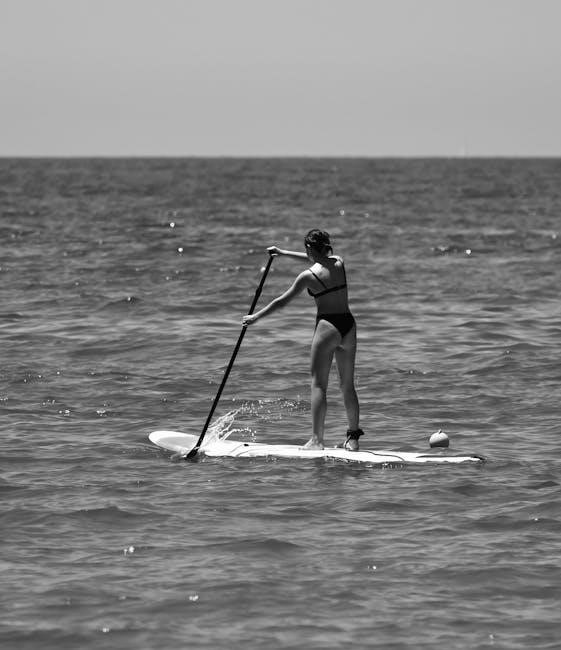
While a board that’s too small presents stability issues, selecting one that’s excessively large introduces a different set of challenges. An oversized paddle board feels cumbersome and difficult to maneuver, requiring significantly more effort to paddle and turn effectively. This can lead to fatigue, especially during longer paddling sessions.
Additionally, larger boards are generally heavier, making transportation and storage more problematic. They also tend to be slower and less responsive, diminishing the overall paddling experience. Finding the right balance between stability and maneuverability is crucial; avoid erring too far on the side of excessive size.
Paddle Board Size Comparison Charts (By Brand)
Navigating the diverse landscape of paddle board brands requires a comparative approach to sizing. Each manufacturer often employs slightly different dimensions for comparable board types, influenced by construction techniques and intended use. Examining brand-specific size charts is therefore essential for informed decision-making.
Below, we’ll outline key sizing information from popular brands like Red Paddle Co and Isle Surf & SUP. These charts typically correlate rider weight with recommended board length, width, and thickness, offering a starting point for selection. Remember to consider your skill level and primary paddling activity when interpreting these guidelines.
Red Paddle Co Size Guide
Red Paddle Co offers detailed sizing recommendations based on rider weight and intended use, categorized across their various board series. For their All-Around boards, a rider weighing 150-180 lbs typically fits a 10’6” x 32” board, while heavier riders (180-220 lbs) may prefer a 10’8” x 34”. Their touring boards generally require increased length for efficient paddling; a 12’6” x 26” is suitable for many.
Consider the volume – Red Paddle Co clearly states volume in liters, aiding in buoyancy calculations. Their website provides interactive tools and charts to refine your selection based on specific needs and experience levels, ensuring optimal performance and stability on the water.
Isle Surf & SUP Size Guide
Isle Surf & SUP categorizes their boards by rider weight and activity, offering a comprehensive size guide on their website. For all-around boards, they suggest a 10’6” x 32” for paddlers between 150-190 lbs, emphasizing stability for beginners. Touring boards, designed for distance, often range from 12’6” to 14’ long and 28-30” wide, accommodating varying rider weights.
Isle also highlights volume as a crucial factor, providing liter measurements for each board. They offer detailed charts and personalized recommendations based on skill level and intended use, helping customers find the perfect fit for optimal performance and enjoyment on the water.